Case 03 · Apologetic
Reliability of Scripture
Claim 01
We can recover what the New Testament originally said better than any other ancient book.
4 exhibits · 6 objections answered
Evidence 01
The number of Greek copies
2 sources · 1 objection
Why this supports the claim
Sources
Institute for New Testament Textual Research, summarized
- Center for the Study of New Testament Manuscripts, “Manuscripts 101: GA Numbers” (opens in a new tab)
CSNTM on the Gregory-Aland numbering and the current manuscript count
Common objections
- ObjectionThe vast majority of those manuscripts are medieval, copied a thousand years after the originals. Doesn’t counting them inflate the number without adding much evidential value?
- Response
Correct, and it is worth being sharp about it: most Greek manuscripts are Byzantine, from the ninth century onward, and the early papyri number only around 140. But the late copies are not worthless. They preserve readings and let scholars trace how the text was transmitted in different regions. The point of the count is comparative: even restricted to early witnesses, the New Testament has more manuscripts within two centuries of composition than any classical text has in total. The raw number is a starting point; how early the copies are is the exhibit that carries the weight.
Evidence 02
The copies in other languages
3 sources · 1 objection
Why this supports the claim
Copies in many languages, made in different regions, give independent lines of evidence for the same text. When they agree, that agreement adds real weight well beyond the Greek copies alone. One honest caution: the totals for the non-Greek copies are older, widely repeated figures and aren’t tracked as carefully as the audited Greek count.
Sources
Andreas Köstenberger, “Is the Bible Today What Was Originally Written?” North American Mission Board
Updated manuscript counts for the New Testament and for classical works, Christian Research Journal (2012)
Clay Jones - Bibliographical Test Updated:
Common objections
- ObjectionThe 24,000 total is an old apologetics number that keeps getting recycled, and translations can’t tell you whether a difference came from the Greek or from the translator.
- Response
The non-Greek totals are older, widely repeated figures that are not audited the way the Greek count is, and a range is safer than a hard number. On usefulness, translations cannot settle fine points of Greek grammar, but they are excellent for detecting large-scale changes such as added or missing verses: a verse present in second-century Syriac and Latin cannot have been inserted into Greek manuscripts in the fourth century. That is the specific work the versions do, and it is the work that matters for the claim that the text was corrupted.
Evidence 03
How other ancient books compare
2 sources · 2 objections
Why this supports the claim
This sets the New Testament against its nearest rivals and shows how far ahead it stands. It’s worth using these corrected figures rather than the old chart still passed around in churches, which lists Plato at 7 copies and Homer at 643. That chart is out of date and overstated, and the real numbers already make the point clearly on their own.
Sources
Christian Research Journal 35, no. 3 (2012)
- Clay Jones, “The Bibliographical Test Updated” (author’s site, with later count updates) (opens in a new tab)
clayjones.net, July 2012, with follow-up posts revising the counts
Common objections
- ObjectionComparing Scripture to Homer is apples and oranges. The New Testament was copied by a religious community that actively preserved it. More copies reflect motivation, not reliability.
- Response
The comparison is not meant to show the New Testament is more true than Homer. It shows that the common objection, that we cannot know what the text originally said, would apply with far greater force to every other ancient text people happily rely on. Motivated copying cuts both ways: it produces many copies, and it also produces the theological variants critics point to. Both effects are real, and textual criticism exists to sort them out. That the sorting can be done with unusual confidence for the New Testament is the whole point.
- ObjectionYou admit the old chart with Plato at seven copies was wrong. How many other apologetics figures on this site are equally outdated?
- Response
A fair challenge, and the only honest answer is to keep correcting. The old chart was retired publicly, the Greek manuscript count was updated, the 24,000 total is flagged as unaudited, and the 95 percent word-for-word figure for the Dead Sea Scrolls was dropped. Every claim on this site carries a correction link for exactly this purpose. A site that corrects its own side’s overstatements should be more trustworthy on the figures it keeps, not less.
Evidence 04
How soon the earliest copies were made
2 sources · 2 objections
Why this supports the claim
The earlier the surviving copies, the less time there was for the text to drift before we can check it. Raw copy counts alone don’t show this. It’s the short gap between writing and earliest copy that shows the New Testament was copied close to the originals. P52 is given as a range rather than a fixed date, since that is how it is dated.
Sources
- Brent Nongbri, “The Use and Abuse of P52,” Harvard Theological Review 98 (2005) (opens in a new tab)
Harvard Theological Review 98, no. 1 (2005): 23-48, on the wide paleographic date range for P52
Christian Research Journal 35, no. 3 (2012), on the dates of the earliest copies
Common objections
- ObjectionP52 is a credit-card-sized scrap with a few words, and paleographers such as Brent Nongbri argue it could date anywhere from the second century to the early third. Isn’t building on it shaky?
- Response
Nongbri’s caution is well founded, which is why P52 is given a range rather than a single date. The larger point survives the correction. Even at AD 200, the gap between composition and earliest fragment is about a century, and substantial papyri such as P46 (Paul’s letters) and P66 and P75 (John and Luke) date to around 200. For Plato and Tacitus the gap is over a thousand years. P52 is a symbol; the case rests on the whole body of early papyri.
- ObjectionThe period before AD 200 is exactly where we have the fewest manuscripts, and it is when most theological editing would have happened. Late abundance can’t fix early scarcity.
- Response
This is Ehrman’s strongest point and it deserves a straight answer. First, the early period is not blank: there are papyri from around 200, quotations in second-century writers such as Justin and Irenaeus, and early translations, all showing the same text. Second, the theory requires a coordinated change before any surviving copy was made, across communities that were often at odds with one another and had no central authority to enforce an edit. Where early editing did happen (the long ending of Mark, for instance), it left fingerprints in the manuscript tradition that scholars have found. The absence of such fingerprints for the core text is evidence, not merely absence of evidence.
Claim 02
The Dead Sea Scrolls show the Old Testament text was copied with remarkable stability across about a thousand years, alongside a documented plurality of text forms.
Between 1947 and 1956, ancient Jewish manuscripts were found in caves near the Dead Sea at Qumran. They were copied roughly between 250 BC and 68 AD. They include copies of every Old Testament book except Esther, counting Ezra and Nehemiah as the one book they form in the Hebrew Bible; no verse of Nehemiah itself has been identified. When these copies are set beside the standard medieval Hebrew text, the Leningrad Codex from 1008 AD, the wording lines up closely across the roughly one thousand years in between. The clearest example is the Great Isaiah Scroll, dated about 125 BC. It matches the later text very closely. The differences that exist are mostly spelling, though a few are real, such as a couple of missing or differing lines. The often quoted figure that it is more than 95 percent word for word comes from a single scholar, Gleason Archer, in 1964, so it is best described as overwhelmingly but not perfectly stable rather than with a hard percentage.
36 exhibits · 25 objections answered
Evidence 01
Genesis
2 sources · 1 objection
Why this supports the claim
Sources
Explore the archive by manuscript, site, and language
- Peter W. Flint, “The Significance of the Biblical Dead Sea Scrolls,” Southwestern Journal of Theology 53.1 (2010), manuscript table (opens in a new tab)
Southwestern Journal of Theology 53, no. 1 (2010): 15-25
Common objections
- ObjectionNearly all the Genesis scrolls are small fragments. You can’t compare a fragment to the medieval text and conclude the whole book was stable.
- Response
True of each fragment individually; the argument is cumulative. Around twenty copies covering different portions of Genesis, all agreeing with the later text where they overlap, give a broad sample of the book across two centuries and many scribes. No single scrap proves stability, but two dozen scraps from different hands and decades, none of which shows a different Genesis, is strong sampling evidence. The claim is that nothing in the sample points to another version, not that any one piece proves the whole.
Evidence 02
Exodus
2 sources · 1 objection
Why this supports the claim
Sources
Explore the archive by manuscript, site, and language
Common objections
- ObjectionOne Exodus scroll, 4QpaleoExod-m, follows the expanded Samaritan-type text, not the Masoretic. Isn’t that a different Exodus at Qumran?
- Response
Correct, and it is a good example of the textual plurality the Scrolls reveal: in the last centuries BC several text forms circulated side by side. The expansions in the Samaritan-type Exodus are mostly harmonizing additions that repeat material from elsewhere in the Pentateuch; they do not introduce new content or change the narrative. Seeing that form beside the proto-Masoretic one is exactly how scholars learned which readings are older. The claim is not that only one Exodus existed but that the one that became standard was faithfully preserved.
Evidence 03
Leviticus
2 sources · 1 objection
Why this supports the claim
Leviticus survives in enough old copies to confirm the law was handed down carefully, which fits the broader picture of faithful copying.
Sources
Explore the archive by manuscript, site, and language
Common objections
- ObjectionA paleo-Hebrew Leviticus is interesting archaeologically, but the script says nothing about whether the words were copied accurately.
- Response
The script matters for a different reason: paleo-Hebrew was a deliberately archaic choice reserved for texts regarded as especially sacred, which shows the care the community took with the Torah. On accuracy, 11QpaleoLev is a substantial scroll whose text is close to the Masoretic tradition with some Samaritan-type readings, which is exactly the kind of witness that lets scholars check both traditions against a third.
Evidence 04
Numbers
2 sources · 1 objection
Why this supports the claim
Sources
Explore the archive by manuscript, site, and language
- Peter W. Flint, “The Significance of the Biblical Dead Sea Scrolls,” Southwestern Journal of Theology 53.1 (2010), manuscript table (opens in a new tab)
Southwestern Journal of Theology 53, no. 1 (2010): 15-25
Common objections
- Objection4QNum-b has expansions matching the Samaritan Pentateuch, so it isn’t quite true that the copies match the later text.
- Response
A fair refinement. 4QNum-b is a mixed text that sometimes agrees with the Samaritan tradition and sometimes with the Septuagint against the Masoretic. That is a real finding, and stating it plainly strengthens the case rather than weakening it. The narrative and legal content of Numbers is stable across all of them; the differences are the kind textual critics use to reconstruct the earliest form of the text, which is what a recoverable tradition looks like.
Evidence 05
Deuteronomy
3 sources · 2 objections
Why this supports the claim
Sources
Israel Antiquities Authority
Cambridge University Library; a second century BC copy of the Ten Commandments and the Shema
Common objections
- ObjectionThe All Souls Deuteronomy (4Q41) isn’t a straight copy. It’s an excerpted liturgical text, and its Ten Commandments reads differently from both Exodus 20 and Deuteronomy 5, including a longer Sabbath command.
- Response
That is accurate. 4Q41 is an excerpt collection, probably for devotional use, and its Decalogue blends the Exodus and Deuteronomy forms. The honest description is the oldest surviving text of the Ten Commandments in an excerpted and slightly harmonized form. The harmonization itself is telling: scribes working from both books presupposes that both were already fixed enough to harmonize, which supports rather than undermines the stability of the underlying texts.
- ObjectionDeuteronomy 32:8 in 4QDeut-j reads “sons of God” where the Masoretic Text reads “sons of Israel.” That’s a theological change in the transmitted text, not a spelling slip.
- Response
Yes, and it is one of the best-known substantive variants, where the Scrolls and the Septuagint preserve the older reading and the Masoretic scribes apparently altered it. Modern translations such as the ESV now follow the Scrolls here. This is textual criticism doing its job in public: the difference is visible, can be studied, and has been corrected in the Bibles people read. A hidden corruption would leave no such trail. Faithful transmission includes preserving the evidence of where the text once differed.
Evidence 06
Joshua
2 sources · 1 objection
Why this supports the claim
Sources
Explore the archive by manuscript, site, and language
- Peter W. Flint, “The Significance of the Biblical Dead Sea Scrolls,” Southwestern Journal of Theology 53.1 (2010), manuscript table (opens in a new tab)
Southwestern Journal of Theology 53, no. 1 (2010): 15-25
Common objections
- Objection4QJosh-a places the altar-building episode at a different point in the narrative than the Masoretic Text. Isn’t that a structural difference, not a copying slip?
- Response
Correct, and this is a case where Qumran may preserve an older arrangement, since Josephus also seems to know the altar episode in that position. With only two copies the base is thin, and Joshua is one of the books where the text form genuinely varied in this period. It does not undermine the claim that the book’s content was preserved: the same events appear in both, in a different order at one point, and the difference is on the table for anyone to weigh.
Evidence 07
Judges
2 sources · 1 objection
Why this supports the claim
Sources
Explore the archive by manuscript, site, and language
- Peter W. Flint, “The Significance of the Biblical Dead Sea Scrolls,” Southwestern Journal of Theology 53.1 (2010), manuscript table (opens in a new tab)
Southwestern Journal of Theology 53, no. 1 (2010): 15-25
Common objections
- ObjectionIf a Qumran copy of Judges lacks a passage the Masoretic Text has, doesn’t that mean the passage was added later? That’s exactly the kind of corruption the claim denies.
- Response
It may mean that, and the variant is of real interest to scholars studying how the book took shape. The claim is not that no word ever changed but that the transmission was faithful and its variations are recoverable. A missing paragraph in one early copy, detectable by comparison, is a variant scholars can weigh, which is the opposite of an undetectable corruption. Faithful transmission includes preserving the evidence of where the text once differed.
Evidence 08
Ruth
2 sources · 1 objection
Why this supports the claim
Sources
Explore the archive by manuscript, site, and language
- Peter W. Flint, “The Significance of the Biblical Dead Sea Scrolls,” Southwestern Journal of Theology 53.1 (2010), manuscript table (opens in a new tab)
Southwestern Journal of Theology 53, no. 1 (2010): 15-25
Common objections
- ObjectionFour fragmentary copies of a four-chapter book don’t demonstrate much. Do entries like this exist only to make the list look complete?
- Response
The list is complete on purpose. The claim is about the whole Old Testament, so every book’s status is reported, including the thin ones and the two that are missing. Ruth’s fragments do agree with the later text where they overlap, which is a small data point in a large sample. Omitting the minor books would invite the charge of hiding gaps; reporting them, thin or not, lets you see the real shape of the evidence.
Evidence 09
1 and 2 Samuel
1 source · 1 objection
Why this supports the claim
Sources
Explore the archive by manuscript, site, and language
Common objections
- Objection4QSam-a differs from the Masoretic Text in hundreds of places and contains a whole paragraph about Nahash the Ammonite that the Masoretic Text lacks. Doesn’t that show the Masoretic Samuel is a damaged text?
- Response
Samuel is the strongest case for the objection, which is why it is stated up front rather than buried. The Masoretic text of Samuel is widely agreed to have suffered more accidental omissions than most books, and 4QSam-a lets scholars repair some of them; the NRSV and other translations now include the Nahash paragraph. This is faithful transmission in the sense that matters: the older form survived in another line, was recovered, and the damage was reversible. The claim would be false only if the corruption were undetectable, and here it was detected.
Evidence 10
1 and 2 Kings
2 sources · 1 objection
Why this supports the claim
Sources
Explore the archive by manuscript, site, and language
- Peter W. Flint, “The Significance of the Biblical Dead Sea Scrolls,” Southwestern Journal of Theology 53.1 (2010), manuscript table (opens in a new tab)
Southwestern Journal of Theology 53, no. 1 (2010): 15-25
Common objections
- ObjectionThree fragmentary copies can’t establish that Kings lines up with the later text. Isn’t that agreement from silence?
- Response
Fair. The fragments agree with the Masoretic tradition where they overlap, and the coverage is limited; that is all that can be said. Kings also has a well-known chronological divergence between the Masoretic and Septuagint traditions that the Qumran fragments are too small to settle. The honest summary is present, fragmentary, and consistent where checkable.
Evidence 11
1 and 2 Chronicles
2 sources · 1 objection
Only a single fragment of 2 Chronicles was found, in Cave 4. No copy of 1 Chronicles has been identified.
Why this supports the claim
This is a thin but honest data point. The one surviving fragment confirms Chronicles was known and copied at Qumran, even though little of it has survived.
Sources
Explore the archive by manuscript, site, and language
- Peter W. Flint, “The Significance of the Biblical Dead Sea Scrolls,” Southwestern Journal of Theology 53.1 (2010), manuscript table (opens in a new tab)
Southwestern Journal of Theology 53, no. 1 (2010): 15-25
Common objections
- ObjectionOne fragment of 2 Chronicles is practically nothing, and it isn’t even certain the fragment is from Chronicles rather than a related text.
- Response
Agreed on both counts; the identification of 4Q118 has been questioned, and the safest wording is probable rather than certain. This is a thin data point. The near-absence of Chronicles at Qumran is more likely a fact about the community’s interests than about the book’s existence, since Chronicles is quoted and known elsewhere in the period. It is listed here for completeness, not as support.
Evidence 12
Ezra
1 source · 1 objection
Why this supports the claim
Sources
Explore the archive by manuscript, site, and language
Common objections
- ObjectionA single copy tells you nothing about stability. There’s nothing to compare it to except the medieval text you’re trying to validate.
- Response
That is the situation for Ezra, and nothing more than present in the collection is claimed. Comparing one early witness to the medieval text is still a comparison across a thousand years; it just cannot detect variation within the Qumran period itself. The claim as a whole rests on the well-attested books such as Isaiah, Psalms, and the Pentateuch. The thin ones are listed so that you can see where the evidence is thin.
Evidence 13
Nehemiah
2 sources · 1 objection
Why this supports the claim
There’s no surviving text of Nehemiah among the scrolls, and it’s worth naming that gap plainly rather than glossing over it. An honest picture of the evidence includes what’s missing, not only what supports the case.
Sources
- Peter W. Flint, “The Significance of the Biblical Dead Sea Scrolls,” Southwestern Journal of Theology 53.1 (2010) (opens in a new tab)
Table of biblical manuscript counts by book. (A Nehemiah fragment once held by the Museum of the Bible was shown in 2020 to be a modern forgery and is not evidence.)
Israel Antiquities Authority, Leon Levy Dead Sea Scrolls Digital Library
Common objections
- ObjectionThe site says every Old Testament book except Esther is represented, then admits no verse of Nehemiah has been identified. Isn’t that a contradiction?
- Response
It is a real wrinkle in wording. Ezra-Nehemiah is one book in the Hebrew canon, so every book except Esther is defensible on a technicality, but a plain reader hears it as Nehemiah is there, and it is not. The accurate statement is that Nehemiah is unattested at Qumran apart from its pairing with Ezra. A small Nehemiah fragment has been reported from the antiquities market, but its provenance is disputed and the fragments once held by the Museum of the Bible proved to be modern forgeries, so nothing should be built on it.
Evidence 14
Esther
2 sources · 1 objection
Why this supports the claim
Esther is the one genuine gap in the record, worth naming plainly rather than glossing over, since an honest account of the evidence includes what’s missing, not just what supports the case. Every other Old Testament book is represented.
Sources
Explore the archive by manuscript, site, and language
- Michael J. Kruger, “The Dead Sea Scrolls, the Book of Esther, and the Argument from Silence” (opens in a new tab)
Canon Fodder (michaeljkruger.com), on why the absence of Esther at Qumran proves little
Common objections
- ObjectionEsther’s absence might mean the Qumran community rejected it as Scripture, which undercuts the idea of a settled canon in this period.
- Response
That is one plausible explanation: Esther never mentions God and centers on a festival, Purim, that the Qumran community did not observe. It bears on the history of the canon, not on transmission, which is what this claim is about. Nobody here argues that the canon was fixed at Qumran, only that the books the community did copy were copied carefully. Esther’s later text is checked against the Septuagint and the Masoretic tradition instead.
Evidence 15
Job
2 sources · 1 objection
Why this supports the claim
Sources
Explore the archive by manuscript, site, and language
Common objections
- ObjectionThe Aramaic Job targum from Qumran ends early and differs from the Hebrew in places. A translation isn’t evidence for the stability of the Hebrew text.
- Response
The targum is evidence that Job was valued and read, which is what it is cited for. For textual stability the Hebrew fragments (4QJob-a and 4QpaleoJob) are the relevant witnesses, and they align with the Masoretic tradition. The targum’s differences and early ending are interesting for the history of interpretation and should not be counted toward the stability claim.
Evidence 16
Psalms
2 sources · 1 objection
Why this supports the claim
Sources
Explore the archive by manuscript, site, and language
Common objections
- ObjectionThe Great Psalms Scroll has a different order, omits some psalms, and adds others, including a prose piece about David’s compositions. Some scholars think it’s an alternative Psalter. Isn’t that a different book, not a wrinkle?
- Response
The debate between liturgical collection and alternative Psalter is real and unresolved, and wrinkle undersells it. What the scroll shows is that the last third of the Psalter was still being arranged in the first century BC while the individual psalms themselves were stable. Content was fixed; ordering was not fully fixed. That distinction matters, because it is exactly the sort of nuance a hostile reader will suspect is being hidden, and it applies to the Book of the Twelve as well.
Evidence 17
Proverbs
1 source
Why this supports the claim
Sources
Explore the archive by manuscript, site, and language
Evidence 18
Ecclesiastes
2 sources · 1 objection
Why this supports the claim
A very early copy of Ecclesiastes pushes the known text of the book far back in time, which shows it was copied faithfully over a long span.
Sources
Explore the archive by manuscript, site, and language
- Peter W. Flint, “The Significance of the Biblical Dead Sea Scrolls,” Southwestern Journal of Theology 53.1 (2010), manuscript table (opens in a new tab)
Southwestern Journal of Theology 53, no. 1 (2010): 15-25
Common objections
- ObjectionAn early copy of Ecclesiastes from about 175 BC is important for dating the book, not for proving faithful copying. There’s no earlier text to compare it to.
- Response
Both are true. The early date of 4QQoh-a refutes the older scholarly view that Ecclesiastes was written in the second century BC, which is a separate point worth having. For stability, the fragment is compared forward to the medieval text and agrees closely, and that thousand-year comparison is what this claim is about.
Evidence 19
Song of Songs
2 sources · 1 objection
Why this supports the claim
Sources
Explore the archive by manuscript, site, and language
- Peter W. Flint, “The Significance of the Biblical Dead Sea Scrolls,” Southwestern Journal of Theology 53.1 (2010), manuscript table (opens in a new tab)
Southwestern Journal of Theology 53, no. 1 (2010): 15-25
Common objections
- ObjectionShorter, excerpted texts means the Qumran Song of Songs is missing chunks of the book. That’s a difference, not a match.
- Response
The excerpted copies omit sections deliberately, apparently for study or liturgical use, the way a modern devotional booklet might. The portions they contain agree with the later text. Excerpting is a fact about how the book was used, not about how it was transmitted, and the two should not be confused.
Evidence 20
Isaiah
2 sources · 1 objection
Why this supports the claim
Sources
Israel Museum, Jerusalem, with Google; the scroll is dated about 125 BC
Common objections
- ObjectionThe Great Isaiah Scroll isn’t the only Isaiah at Qumran. 1QIsa-b is much closer to the Masoretic Text, which shows 1QIsa-a is a freer, more popular copy. Isn’t using the freer one as the showcase misleading?
- Response
A fair refinement, and it strengthens the case. 1QIsa-b’s closeness to the Masoretic Text is the better evidence for stability, while 1QIsa-a’s fuller spelling and popular features show the range of copying practice. Together they show two scribes, a century apart and working in different registers, transmitting the same Isaiah. The Great Isaiah Scroll’s showcase status comes from its completeness, not from being the best textual witness, and both things are true at once.
Evidence 21
Jeremiah
1 source · 1 objection
Why this supports the claim
Jeremiah shows two ancient forms of the book existing side by side. Rather than a problem to hide, this is genuinely useful: seeing both forms helps scholars trace the text’s history, and it’s an example of the evidence being handled honestly rather than smoothed over.
Sources
Explore the archive by manuscript, site, and language
Common objections
- ObjectionThe Septuagint Jeremiah is about an eighth shorter and differently arranged, and 4QJer-b shows that shorter Hebrew form existed. So which Jeremiah is the faithfully copied one? You can’t have two originals.
- Response
You can have two editions, which is what most scholars conclude: a shorter earlier form and a longer expanded form both circulated before the Christian era. The claim is about transmission, and both editions were transmitted faithfully in their respective lines. Jeremiah is the clearest case where the phrase the original text is more complicated than for most books, and saying so costs nothing. It also shows the tradition preserving both forms rather than quietly suppressing one.
Evidence 22
Lamentations
2 sources
Why this supports the claim
Sources
Explore the archive by manuscript, site, and language
- Peter W. Flint, “The Significance of the Biblical Dead Sea Scrolls,” Southwestern Journal of Theology 53.1 (2010), manuscript table (opens in a new tab)
Southwestern Journal of Theology 53, no. 1 (2010): 15-25
Evidence 23
Ezekiel
2 sources · 1 objection
Why this supports the claim
Sources
Explore the archive by manuscript, site, and language
Common objections
- ObjectionThe Ezekiel fragments are tiny, and the big text-critical issues in Ezekiel involve the Septuagint being shorter, which the fragments can’t resolve.
- Response
Correct on both points; the honest summary is fragmentary and consistent where checkable, not broad confirmation. The Masada Ezekiel scroll, found outside Qumran, is a better witness and aligns closely with the Masoretic tradition. The Septuagint’s shorter Ezekiel remains a live question that the Judean desert finds do not settle.
Evidence 24
Daniel
2 sources · 1 objection
Why this supports the claim
Sources
Explore the archive by manuscript, site, and language
- Peter W. Flint, “The Significance of the Biblical Dead Sea Scrolls,” Southwestern Journal of Theology 53.1 (2010), manuscript table (opens in a new tab)
Southwestern Journal of Theology 53, no. 1 (2010): 15-25
Common objections
- ObjectionThe Qumran Daniel fragments date to within decades of the book’s likely composition in the 160s BC, which supports the critical late dating and undercuts its predictive prophecy. Doesn’t that cut against apologetics?
- Response
Only textual stability is claimed here, and on that point the fragments are unambiguous: the Hebrew-Aramaic-Hebrew structure and the wording match the later text. On dating, the earliest Daniel fragment (4QDan-c) is usually placed around 125 BC, which some scholars argue is too soon after a 165 BC composition for the book to have reached scriptural status, while others disagree. That is a separate debate that belongs in a discussion of prophecy, and it is deliberately not smuggled in here.
Evidence 25
Hosea
2 sources · 1 objection
Why this supports the claim
Sources
Explore the archive by manuscript, site, and language
- Peter W. Flint, “The Significance of the Biblical Dead Sea Scrolls,” Southwestern Journal of Theology 53.1 (2010), manuscript table (opens in a new tab)
Southwestern Journal of Theology 53, no. 1 (2010): 15-25
Common objections
- Objection4QXII-a places Jonah after Malachi, so the order of the Twelve wasn’t fixed at Qumran.
- Response
Correct, and it is the same pattern seen in Psalms: the individual books are stable while the arrangement of the collection was still settling. The Qumran and Murabba’at copies attest the Twelve with the Masoretic content, and the Greek Nahal Hever scroll shows the same text being carefully revised toward the Hebrew in the first century. Order of books and wording of books are different questions, and only the second bears on the claim.
Evidence 26
Joel
2 sources
Why this supports the claim
Sources
Explore the archive by manuscript, site, and language
- Peter W. Flint, “The Significance of the Biblical Dead Sea Scrolls,” Southwestern Journal of Theology 53.1 (2010), manuscript table (opens in a new tab)
Southwestern Journal of Theology 53, no. 1 (2010): 15-25
Evidence 27
Amos
2 sources
Why this supports the claim
Sources
Explore the archive by manuscript, site, and language
- Peter W. Flint, “The Significance of the Biblical Dead Sea Scrolls,” Southwestern Journal of Theology 53.1 (2010), manuscript table (opens in a new tab)
Southwestern Journal of Theology 53, no. 1 (2010): 15-25
Evidence 28
Obadiah
2 sources
Why this supports the claim
Sources
Explore the archive by manuscript, site, and language
- Peter W. Flint, “The Significance of the Biblical Dead Sea Scrolls,” Southwestern Journal of Theology 53.1 (2010), manuscript table (opens in a new tab)
Southwestern Journal of Theology 53, no. 1 (2010): 15-25
Evidence 29
Jonah
2 sources
Why this supports the claim
Sources
Explore the archive by manuscript, site, and language
- Peter W. Flint, “The Significance of the Biblical Dead Sea Scrolls,” Southwestern Journal of Theology 53.1 (2010), manuscript table (opens in a new tab)
Southwestern Journal of Theology 53, no. 1 (2010): 15-25
Evidence 30
Micah
2 sources
Why this supports the claim
Sources
Explore the archive by manuscript, site, and language
- Peter W. Flint, “The Significance of the Biblical Dead Sea Scrolls,” Southwestern Journal of Theology 53.1 (2010), manuscript table (opens in a new tab)
Southwestern Journal of Theology 53, no. 1 (2010): 15-25
Evidence 31
Nahum
2 sources
Why this supports the claim
Sources
Explore the archive by manuscript, site, and language
- Peter W. Flint, “The Significance of the Biblical Dead Sea Scrolls,” Southwestern Journal of Theology 53.1 (2010), manuscript table (opens in a new tab)
Southwestern Journal of Theology 53, no. 1 (2010): 15-25
Evidence 32
Habakkuk
2 sources · 1 objection
Why this supports the claim
Sources
Explore the archive by manuscript, site, and language
- Peter W. Flint, “The Significance of the Biblical Dead Sea Scrolls,” Southwestern Journal of Theology 53.1 (2010), manuscript table (opens in a new tab)
Southwestern Journal of Theology 53, no. 1 (2010): 15-25
Common objections
- ObjectionThe Habakkuk Commentary quotes only chapters 1 and 2, and its lemmas sometimes differ from the Masoretic Text. Was chapter 3 even part of the book at Qumran?
- Response
The pesher covers only chapters 1 and 2, and scholars debate whether that reflects the commentator’s interest or the state of the book. Chapter 3 is present in the Murabba’at scroll of the Twelve and in the Greek Nahal Hever scroll, so the fuller book was known in the period. The pesher’s variants in its quoted text are minor and are used in critical editions, which is what one expects from a real early witness.
Evidence 33
Zephaniah
2 sources
Why this supports the claim
Sources
Explore the archive by manuscript, site, and language
- Peter W. Flint, “The Significance of the Biblical Dead Sea Scrolls,” Southwestern Journal of Theology 53.1 (2010), manuscript table (opens in a new tab)
Southwestern Journal of Theology 53, no. 1 (2010): 15-25
Evidence 34
Haggai
2 sources
Why this supports the claim
Sources
Explore the archive by manuscript, site, and language
- Peter W. Flint, “The Significance of the Biblical Dead Sea Scrolls,” Southwestern Journal of Theology 53.1 (2010), manuscript table (opens in a new tab)
Southwestern Journal of Theology 53, no. 1 (2010): 15-25
Evidence 35
Zechariah
2 sources
Why this supports the claim
Sources
Explore the archive by manuscript, site, and language
- Peter W. Flint, “The Significance of the Biblical Dead Sea Scrolls,” Southwestern Journal of Theology 53.1 (2010), manuscript table (opens in a new tab)
Southwestern Journal of Theology 53, no. 1 (2010): 15-25
Evidence 36
Malachi
2 sources
Why this supports the claim
Sources
Explore the archive by manuscript, site, and language
- Peter W. Flint, “The Significance of the Biblical Dead Sea Scrolls,” Southwestern Journal of Theology 53.1 (2010), manuscript table (opens in a new tab)
Southwestern Journal of Theology 53, no. 1 (2010): 15-25
Claim 03
Archaeology backs up specific people, places, and details in the Bible.
4 exhibits · 3 objections answered
Evidence 01
Tel Dan Stele
3 sources · 1 objection
Exhibits
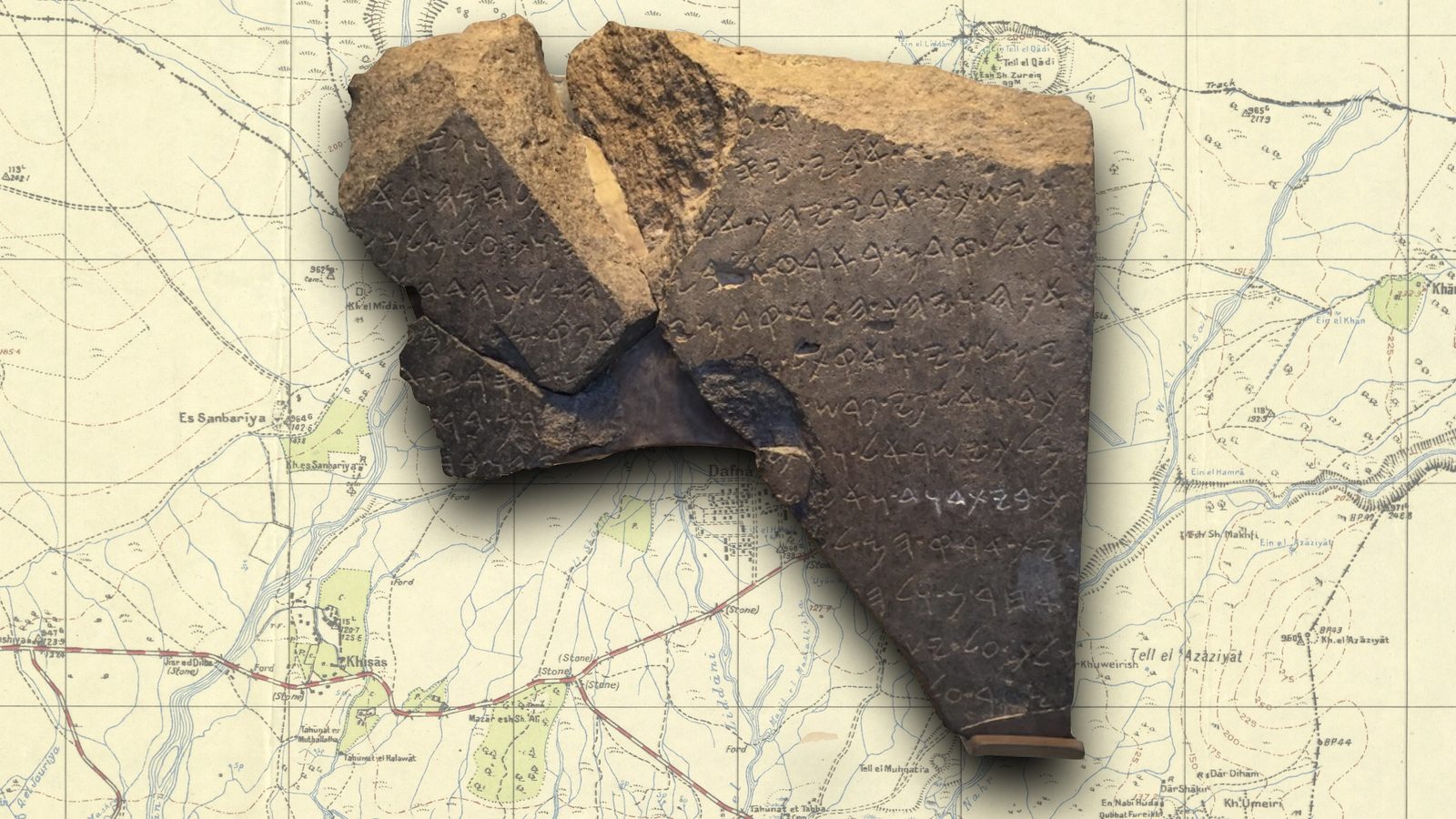
Why this supports the claim
Sources
Biblical Archaeology Society; Museum of the Bible; Israel Antiquities Authority. - BAS - Tel Dan Inscription:
Museum of the Bible - Tel Dan Stele:
Biblical Historical Context, “The Tel Dan Stele”
Common objections
- Objection“bytdwd” has no word divider; it could be a place name or a temple name rather than “House of David.” And even if it is David’s dynasty, that only shows a ninth-century kingdom claimed descent from a David.
- Response
Both points are fair and should stay visible. The House of David reading is accepted by the large majority of epigraphers because house of X is the standard Aramaic and Assyrian way of naming a dynasty, the parallel king of Israel appears in the same inscription, and no place called Beth-Dod is otherwise attested. On the second point, the stele is offered only as evidence for David’s dynasty, which is exactly what it shows: within about 130 years of David’s traditional dates, an enemy king recognized a Judahite royal house named after him. That is what you would expect if David existed, and not what you would expect if he was invented centuries later.
Evidence 02
The Pilate Stone
1 source · 1 objection
Why this supports the claim
Common objections
- ObjectionNobody doubted Pilate existed; Josephus, Philo, and Tacitus all mention him. What does the stone add?
- Response
Fair in one sense: Pilate’s existence was never in serious doubt. The stone’s value is that it is a contemporary inscription rather than a later literary reference, that it fixes his correct title (prefect), and that it confirms the Gospels’ picture of a Roman governor based at Caesarea. It is a small corroboration and should be weighed as one.
Evidence 03
The Caiaphas Ossuary
2 sources · 1 objection
Exhibits
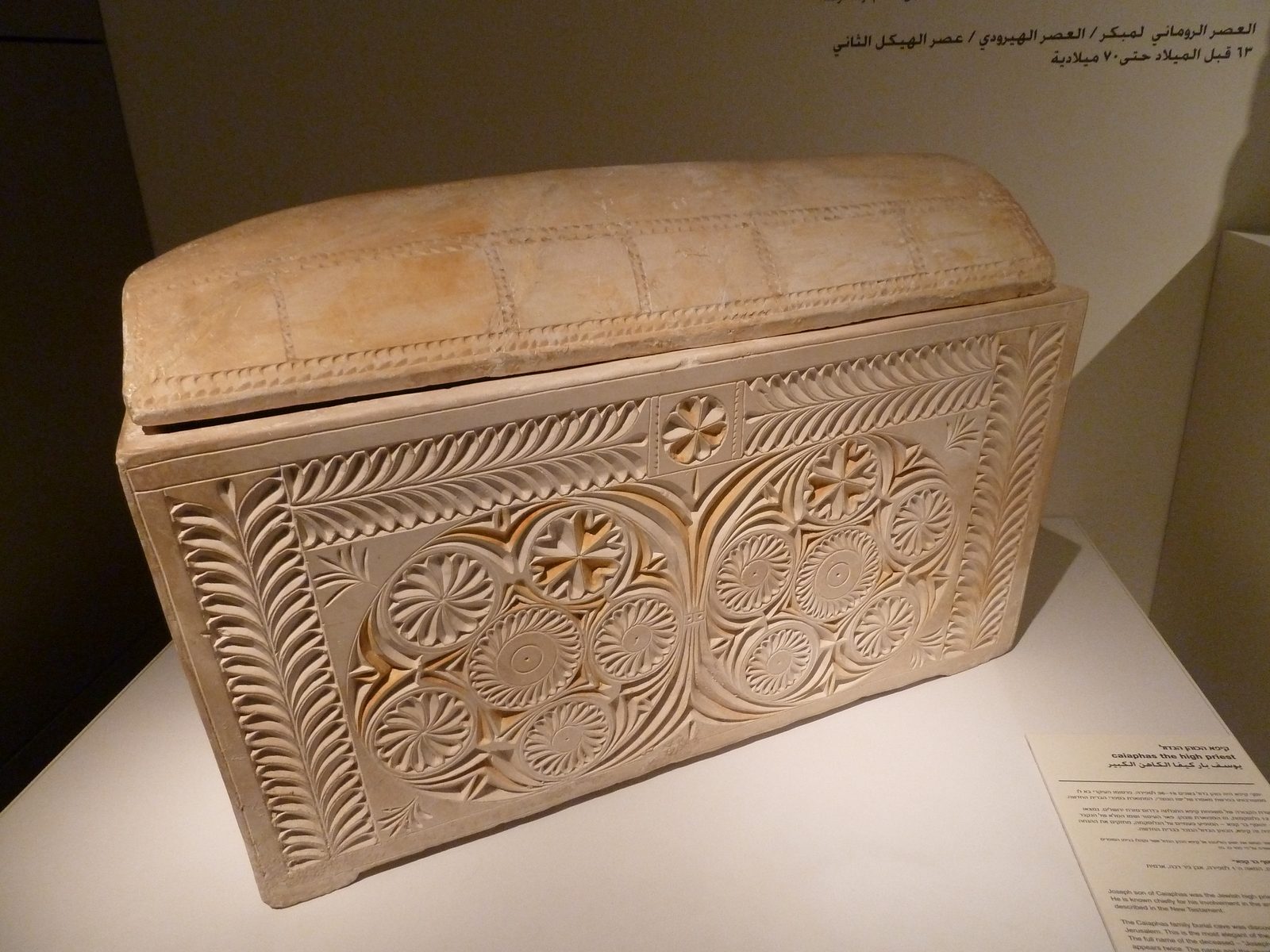
Why this supports the claim
Sources
By deror_avi - Own work, CC BY-SA 3.0, https://commons.wikimedia.org/w/index.php?curid=22215161
Common objections
- ObjectionThe name doesn’t match Josephus exactly, the ossuary lacks any priestly title, and the tomb is too modest for a high priest. Several scholars think it belongs to a different family.
- Response
All three cautions are real and should stay prominent. The strongest counter is the 2011 discovery of an ossuary inscribed Miriam daughter of Yeshua son of Caiaphas, priest of Ma’aziah, which independently confirms a priestly Caiaphas family in the right period and place. The identification with the Gospel Caiaphas remains probable rather than certain, and that is how it should be presented.
Evidence 04
Pool of Siloam
2 sources
Exhibits
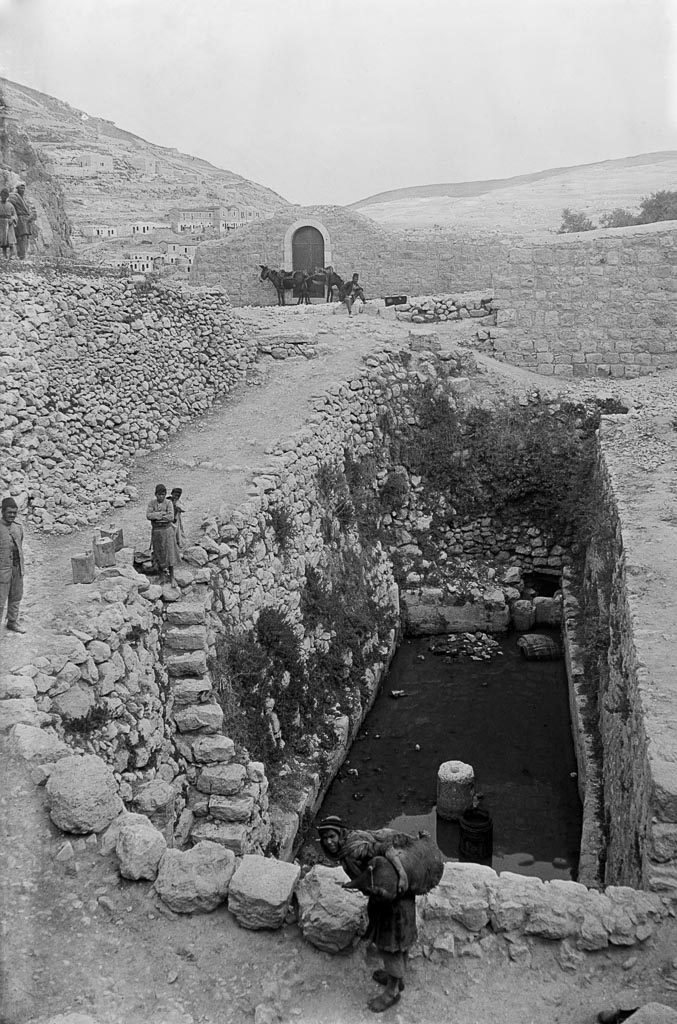
Why this supports the claim
Sources
Biblical Archaeology Society - Israel Antiquities Authority. - BAS - the Siloam Pool:
BiblePlaces - Pool of Siloam:
Claim 04
Jewish scribes copied the Old Testament with strict, built in checks for error.
The people who copied the Hebrew Bible followed careful rules to catch mistakes. This copying culture is part of why the text stayed so stable over time. One honest point about timing is worth naming up front: the strict counting rules described below are documented a few centuries after the Dead Sea Scrolls were copied, even though the broader tradition of careful transmission goes back further.
1 exhibit · 1 objection answered
Evidence 01
The counting rules of the scribes
1 source · 1 objection
Why this supports the claim
Sources
Reference entry on the Masoretes and their counting and checking practices
Common objections
- ObjectionThe specific rules usually quoted (counting letters, finding the middle word, discarding a scroll for one error) come from later Talmudic and post-Talmudic sources, and the most colorful versions are exaggerated in popular apologetics.
- Response
The rules do need dates attached. The Masoretes compiled letter and word counts and noted the middle letters of books, and those counts survive in the margins of medieval manuscripts, so the core of the claim is documented. The rule that a whole scroll is discarded for a single error is a Talmudic-era standard for Torah scrolls and should be described that way, not as a general practice from the beginning. These rules explain the stability of the medieval text; the earlier stretch from the authors to Qumran is known only from the manuscripts themselves, which show careful copying alongside real variation between text types.
Claim 05
The New Testament manuscripts contain hundreds of thousands of variants, and knowing what that number means keeps both panic and overconfidence away.
There are more differences among the New Testament manuscripts than there are words in the New Testament, a figure often put near 400,000 across the roughly 5,800 Greek copies. That sounds alarming until you see what makes the number large. The more copies you have, the more variants you count, and the New Testament is copied far more than any other ancient work. The great majority are spelling, word order, and obvious slips that change nothing. A small number affect meaning, and a smaller number affect meaning and are seriously contested. No teaching of the faith rests on a contested reading. The honest position is that the text is neither uncertain nor flawless, but recoverable to a very high degree.
1 exhibit · 1 objection answered
Evidence 01
Bart Ehrman and Daniel Wallace agree on the data
1 source · 1 objection
Ehrman, who uses the variants to argue for uncertainty, and Wallace, who argues the opposite, agree on the basic facts: the number is large because the manuscript pool is large, and most variants are trivial. They disagree over how many meaningful and viable variants remain and what follows. Their published debate is a good place to see both the shared data and the real dispute.
Why this supports the claim
When the leading skeptic and a leading defender agree on the numbers and differ only on the significance, you can trust the numbers and weigh the significance yourself. That is firmer ground than either slogan.
Sources
- Bart D. Ehrman and Daniel B. Wallace, “The Reliability of the New Testament” (Fortress, 2011). (opens in a new tab)
A debate in print where both sides state the shared data.
Common objections
- ObjectionEhrman’s point is that we cannot know the original wording where it matters. Doesn’t the sheer number of variants mean the text is uncertain exactly where it counts?
- Response
Ehrman’s own textbook, the standard one in the field, says the number of variants that are both meaningful and viable is small and that the essentials are not in doubt. The places that matter most, where a teaching could hinge, are few and are discussed openly in the footnotes of any modern Bible. Uncertainty about whether a verse reads Lord or Lord Jesus is real, and it is not the same as uncertainty about what the New Testament teaches.
Claim 06
The New Testament canon was recognized over time by wide usage, not invented at the Council of Nicaea.
A popular claim says the church chose the New Testament books at Nicaea in 325, or that an emperor picked them for political reasons. Neither is accurate. Nicaea did not discuss the canon at all. The core Gospels and letters of Paul were used and quoted as scripture across the churches within a century of their writing, long before any council ruled. Early lists such as the Muratorian Fragment show broad agreement, with a few books debated at the edges. The canon was recognized by which books the churches were already reading, not imposed from the top.
1 exhibit · 1 objection answered
Evidence 01
What Nicaea actually addressed, and what the early churches read
1 source · 1 objection
The surviving canons and creed of Nicaea concern the relationship of the Son to the Father, not which books are scripture. Meanwhile writers from the early second century quote the Gospels and Paul as authoritative. The picture is recognition spread across time and regions, not a single ruling.
Why this supports the claim
This answers the popular version of church history with the actual record. The books disputed longest, such as Hebrews and Revelation, are exactly the ones a top-down process would have settled fastest.
Sources
Standard scholarly account of how the canon was recognized.
Common objections
- ObjectionPlenty of other gospels existed, like Thomas and Judas. Isn’t calling the four Gospels scripture just the winners writing history?
- Response
The other gospels are real and worth reading, but most are considerably later, second century and after, and many carry a clear theological program the churches did not recognize as apostolic. The four canonical Gospels are the earliest and the most widely attested. Recognition tracked age and reach, not political victory. You can read Thomas and see for yourself how different in kind it is.